One reason I have always been hesitant to wade barefoot in ponds or slow-moving streams is my fear of being bitten by one of the largest of our local insects, the giant water bug.
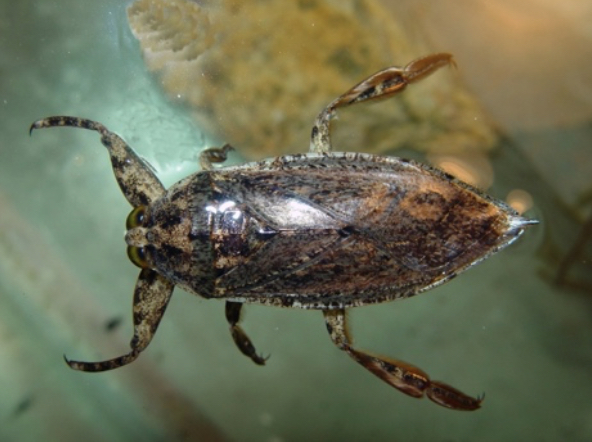
Photo: Steven Walker via Flickr
In size, up to and sometimes more than two inches, this is indeed a big bug. Sometimes referred to as an underwater cockroach due to its similar appearance, it is a much more formidable insect with those modified front legs giving it a more daunting appearance. And indeed, this is a ferocious carnivore, feeding not only on other insects, frogs, slugs and snails, but small fish and even turtles, snakes and small wading birds. It stalks and ambushes its prey, seizing them in its talons and injecting its powerful poison not only to anesthetize them but to turn their bodies into a kind of digestible mush.
It is that injection that gives them their reputation as toe biters. “Excruciatingly painful,” one author describes it. Thankfully, however, such encounters are rare. You can witness the result here:
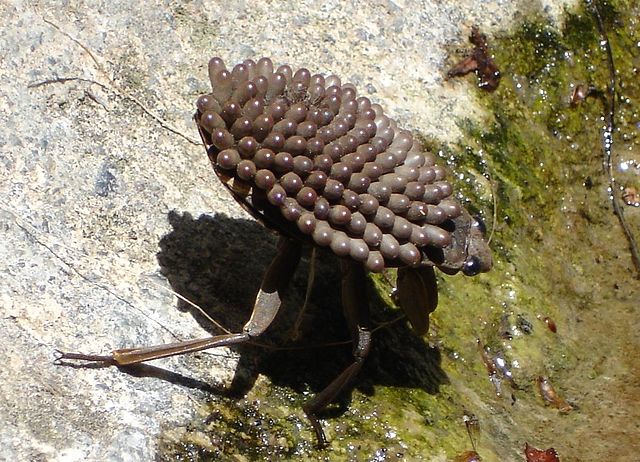
But as it is with some nasty humans, there is another side to this underwater monster: the males are unusually caring family men. As a kind of paid-for-play transaction, after each bout of sexual activity, the female deposits a few eggs on the back of her mate, where they continue to accumulate often up to well over a hundred. The male tends these eggs, raising them to the water surface occasionally to expose them to the oxygen necessary to their life and growth. He too needs oxygen and he captures some under what would correspond to our armpits to allow him to remain underwater longer. This care continues for about a week after which tiny replicas hatch and swim away.
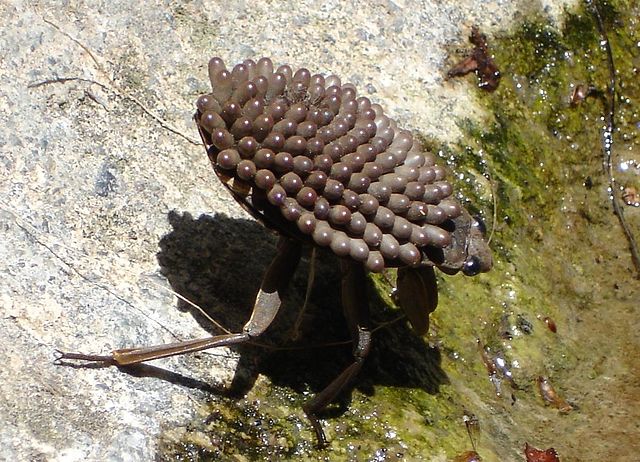
Photo: Matthew Robinson via Flickr
I’m just as happy not to have seen one of these belostomids in the water but I have seen a few flying (yes, they are aeronautical as well as naval creatures) around lights at night. Even there they appear outsized, like awkward birds next to the smaller moths and June bugs.