By Dick Moss
FINWR president
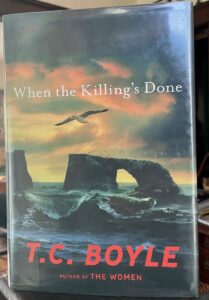
“When the Killing’s Done,” a 2011 fiction book by T.C. Boyle, explores the topic of invasive species.
If you want a crash course on invasive species, this book will do it even though it’s a work of fiction.
I’ve been a T.C. Boyle fan for years but missed this one when it first came out in 2011. I found it in a library book sale so snapped it up.
Boyle is a very good writer but not an easy read. He’s a purveyor of complex sentences, obscure words, multi-faceted descriptions, and piercing portraits. He also likes to dissect relatively unknown historical events.
In “When the Killing’s Done,” the subject is a controversial National Park Service plan to kill invasive rats on one of California’s Channel Islands and a Park Service information officer’s clash with an animal rights activist who thinks the mass killing of rats is appalling and unnecessary.
Along the way Boyle explores some fascinating related stories, including the poster child for invasive species, the brown tree snake, which was accidentally introduced to Guam during WWII and eventually took over the island, wiping out most of its unique bird species.
He also explores what happened when sheep and then pigs were introduced to a different island in the chain, leading at least this reader to conclude that Boyle is saying the worst invasive species is the one on two legs.
By applying fiction to these historical events, Boyle is free to draw his own conclusions about the deeper truths of how they affected people on the ground and impacted society.
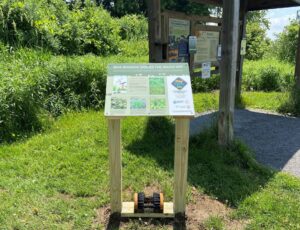
One of the refuge’s brush-off stations,
One way you can help combat invasive species is to use the brush-off stations at the trail heads at Iroquois National Wildlife Refuge. Use the stations to brush off your shoes/boots before you walk the trails to get rid of any seeds that may be trying to hitchhike their way into the refuge.
You can reach Dick Moss through his FINWR email, heron@finwr.org.