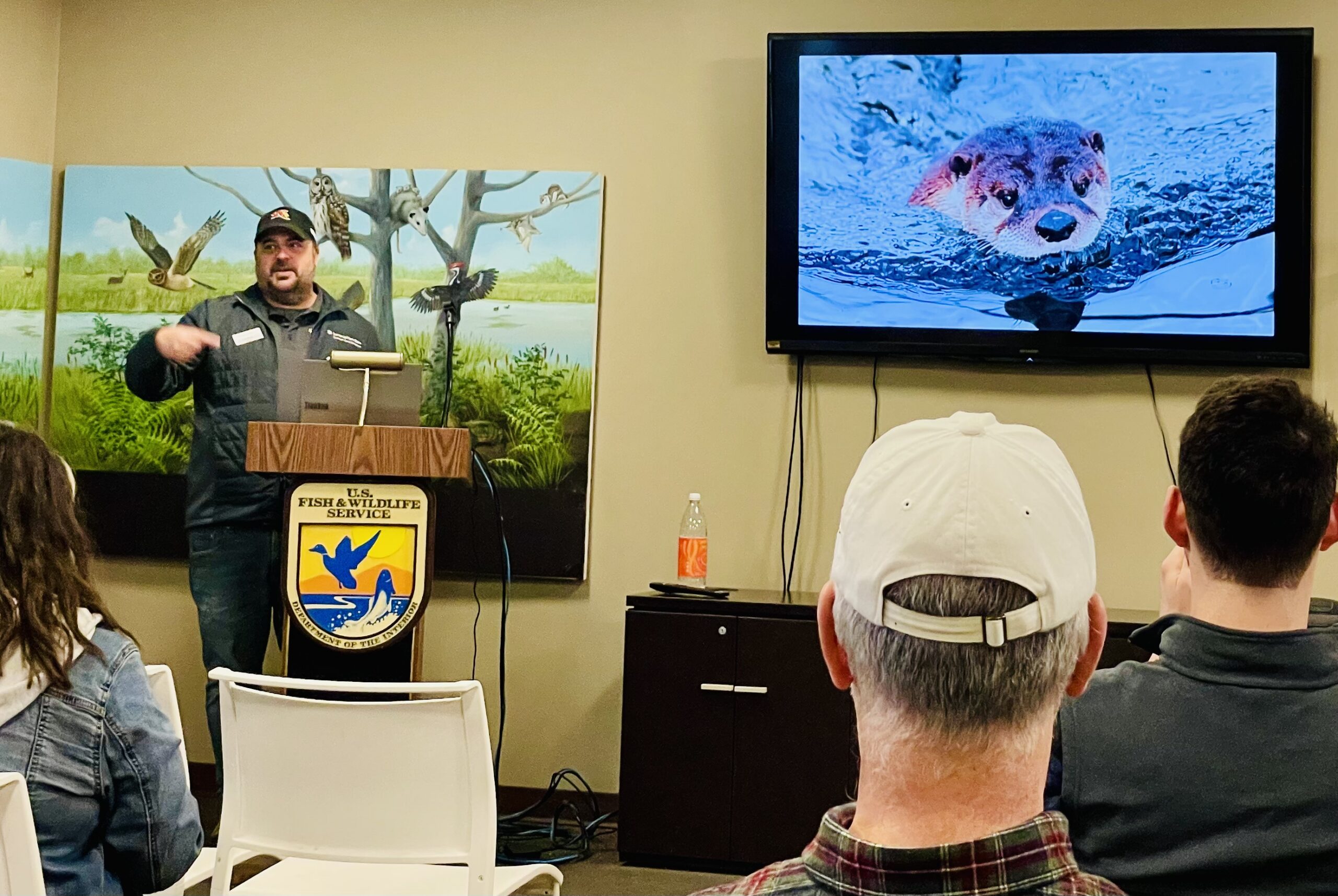
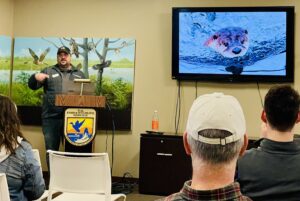
Tom Snyder of Seneca Park Zoo gives a presentation on otters at Iroquois National Wildlife Refuge. (Richard Moss photo)
By Richard Moss
Friends of Iroquois National Wildlife Refuge
River otters are becoming so prevalent in New York State that some officials are wondering whether to allow trapping of the species again.
Whether or not trapping is allowed is a separate and controversial discussion, but the mere fact that question is being asked is a good marker for how successful the river otter reintroduction program has been in the state, Tom Snyder of the Seneca Park Zoo and Zoo Society said Saturday during a presentation on the species at Iroquois National Wildlife Refuge.
River otters were once very prevalent in this area, but a combination of the fur trade, especially in the 1800s, and the Industrial Revolution with its attendant pollution decimated the population in the United States.
Snyder has been involved with aspects of the reintroduction program, including DNA testing of habitat water and otter latrine sites to determine the extent of their territories.
Snyder cited a 2019 report by the state Department of Environmental Conservation and the State University of New York’s College of Environmental Science and Forestry that said river otters were all but extirpated from the state by the 1930s. The report said a reintroduction/translocation program from 1995 to 2000 has made strides in improving the otter population. The report analyzed a variety of surveys and concluded that the estimated probability of site use by otters doubled post-2010 versus pre-2010.
“From 2013-2015, site colonization and extinction rates, and an occupancy-
estimate of population growth, all pointed to population stability,” the report stated.
River otters are notoriously shy and hard to spot, but they are out there — the bald eagle nest camera run by the Friends of Iroquois National Wildlife Refuge caught an otter loping across the marsh ice last month, and Snyder helped identify it as an otter (as opposed to a mink or fisher, both of which it can be confused for).
Snyder said the refuge land is perfect type of territory for otters. Some tips Snyder offered for spotting otters at the Iroquois refuge:
- Try dawn or dusk in early spring or fall, the periods of peak activity. (Just remember the refuge is closed between sunset and sunrise.) Bridge crossings and open log jams along Oak Orchard River are good places to look.
- Listen: Otters will give loud, explosive snorts when surprised. In family groups they make chirping and squeaking noises.
- Otters are curious ─ if you stay quiet and low, they may come investigate. Never approach or follow them.
- Signs without sightings: Scat on rocks and logs, slides in muddy banks, fish scales and crayfish remains, and nose-smear marks in snow.
- Report your sightings: Log observations on the iNaturalist app or the USFWS Iroquois NWR checklist — your data contributes to real science when you report your sightings.
Richard Moss is president of the Friends of Iroquois National Wildlife Refuge and a retired newspaper editor. You can contact him at heron@finwr.org.