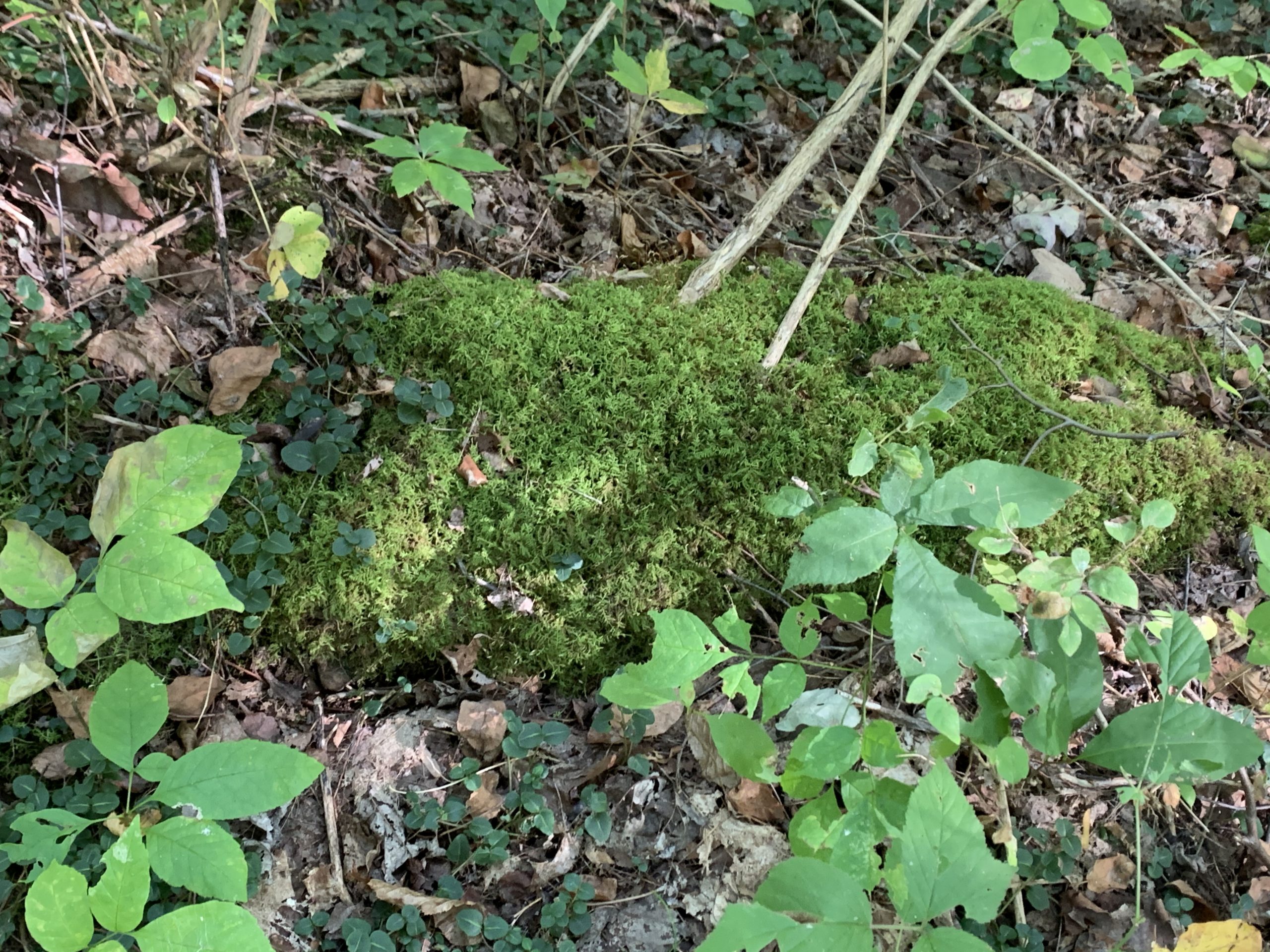
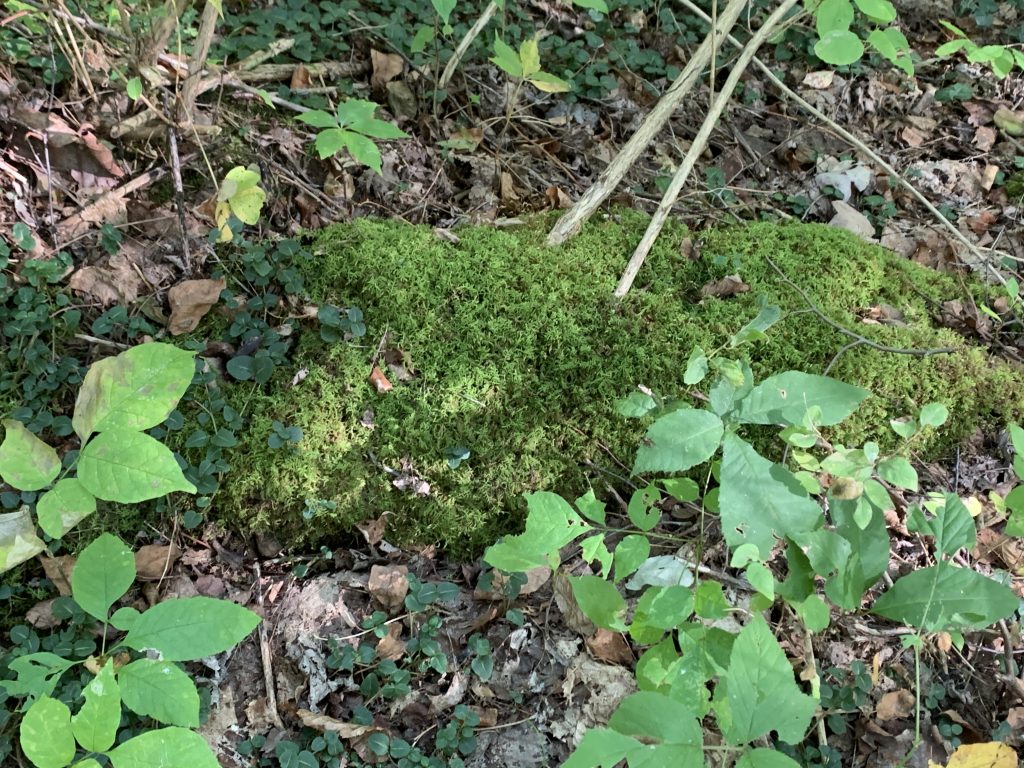
When I was young, my grandmother would buy flowers, plant them in clay pots, and place them on the graves of loved ones at our church cemetery. When the flowers were planted and watered, she would send me into the woods behind our house to gather patches of moss to place over the soil in the pots “to preserve the moisture” she said. In my hunt for the right kind of moss to fit in the pots, I became fascinated with the many places moss grew, and finding the moss that would best fit around the flowers and keep them moist.
When Gathering Moss by Robin Wall Kimmerer appeared in my recommended books at Amazon, my memory of those moss searches sparked my immediate purchase of the book. Ms. Kimmerer, a Native American and environmental science professor at SUNY, seamlessly combines indigenous ways of understanding nature with Western science, while weaving it with stories of motherhood and human relationships. She illuminates the biology of mosses; then focuses on what mosses have to teach us.
Did you know it’s estimated that close to 22,000 species of moss live and grow in nearly every ecosystem? Mosses grow everywhere it seems … on logs, trees, rocks, ponds, streams, cracks in sidewalks, roofs… Their smallness enables them to live in places where trees or larger plants cannot. They survive by elegantly adapting their unique properties to the physical laws of interaction between air and earth. As Ms. Kimmereer says, “In being small, their limitation is their strength.” In her discussion of Dicranum moss reproduction, she notes that in this species a dwarf male and large female evolved over time, enabling more offspring and better nurturing. This species adapted by avoiding competition for habitat, and thus were able to provide the needed light, water, space, and nutrients for their offspring.
Among other things, moss teaches that being small is not bad, and competition might not be the best thing.
I wrote the words “amazing” and “beautiful in the margins all over my book. But most importantly, I took my magnifying glass to the refuge, and walked the Kanyoo Trail searching for moss, stooping down to view the moss closely and intimately. My appreciation for their tiny world grew, along with a stronger realization of our interdependence on all of the natural world. Among other things, moss teaches that being small is not bad, and competition might not be the best thing. Knowing more about moss helped me see my humanity in new ways. No doubt … slowing down and coming close, enriches our knowing of mosses and our knowing of the world.
Robin Wall Kimmerer opens up the world of moss for all to be amazed.