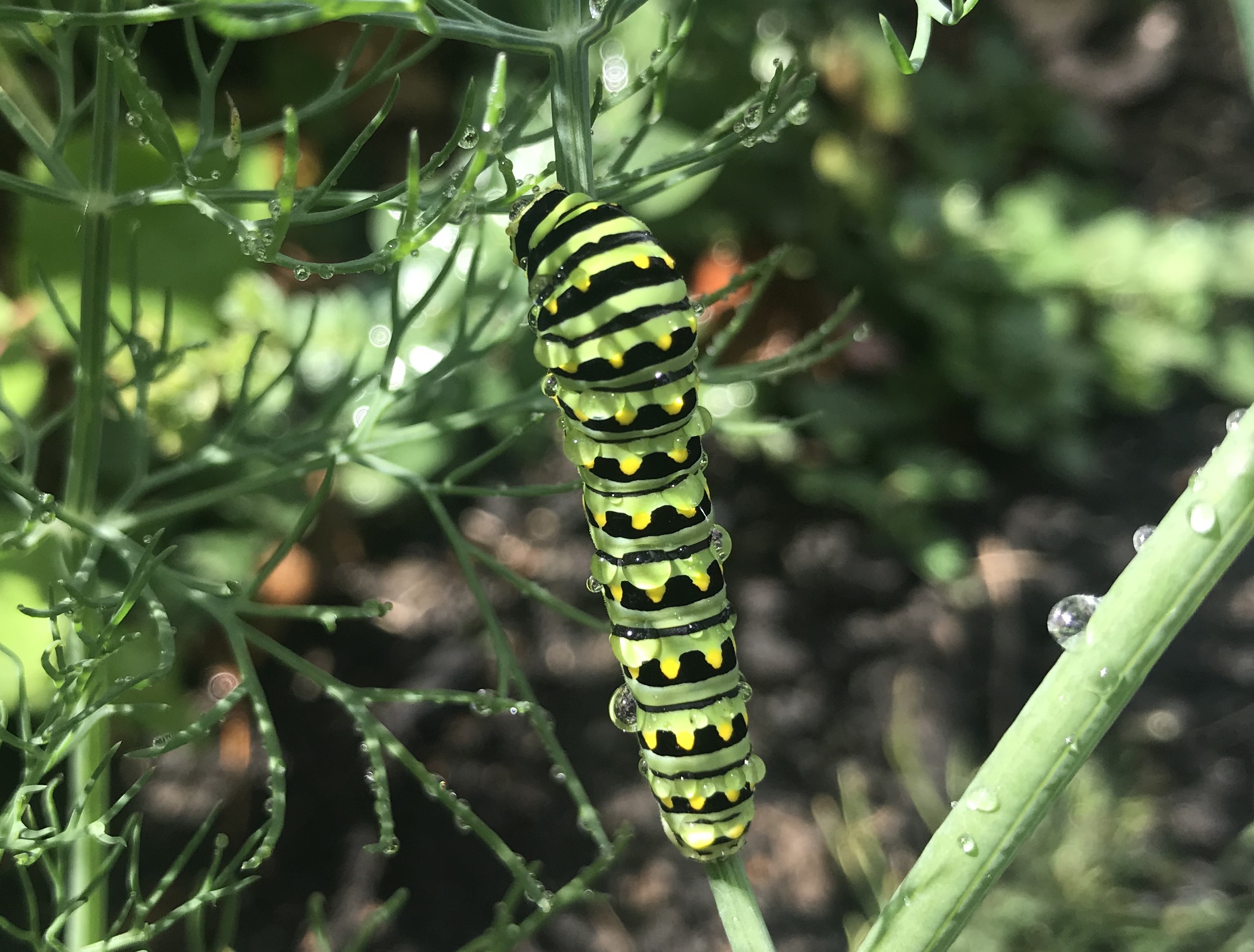
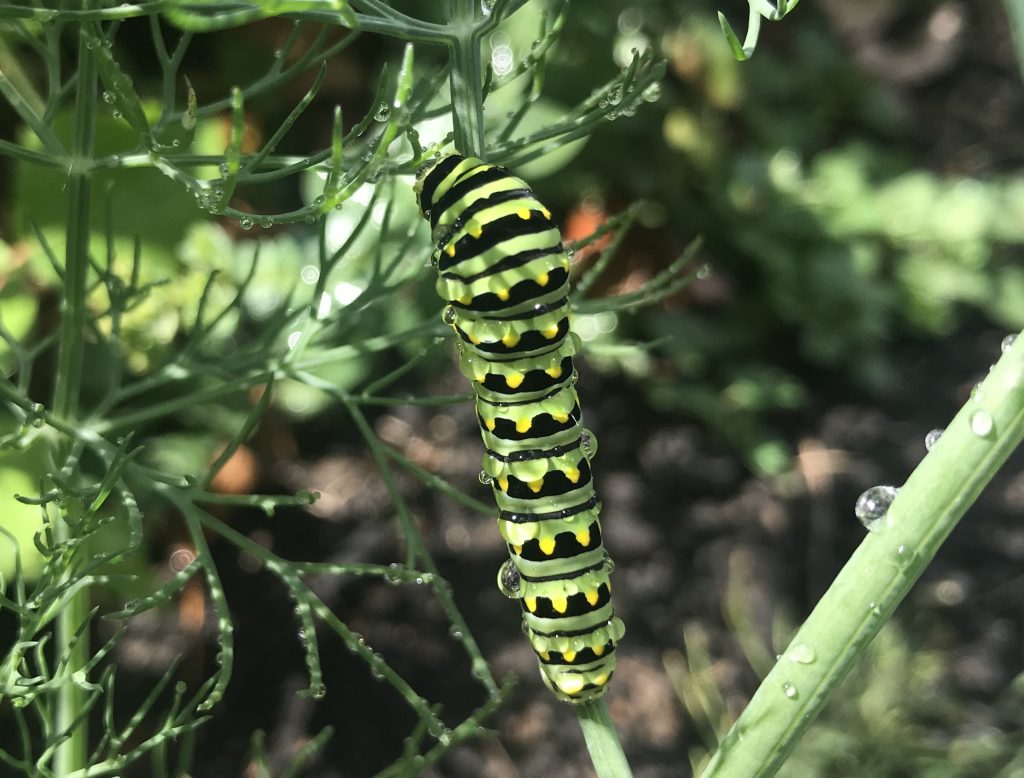
If you thought Monarch Butterflies were tough, then check out our local Swallowtail Butterflies. The caterpillar in the photo might overwinter as pupa in a chrysalis near the host plant. Instead of flying thousands of miles to a warmer climate, like the Monarch, the Black Swallowtail (Papilio polyxenes) will endure Western New York’s Winter.
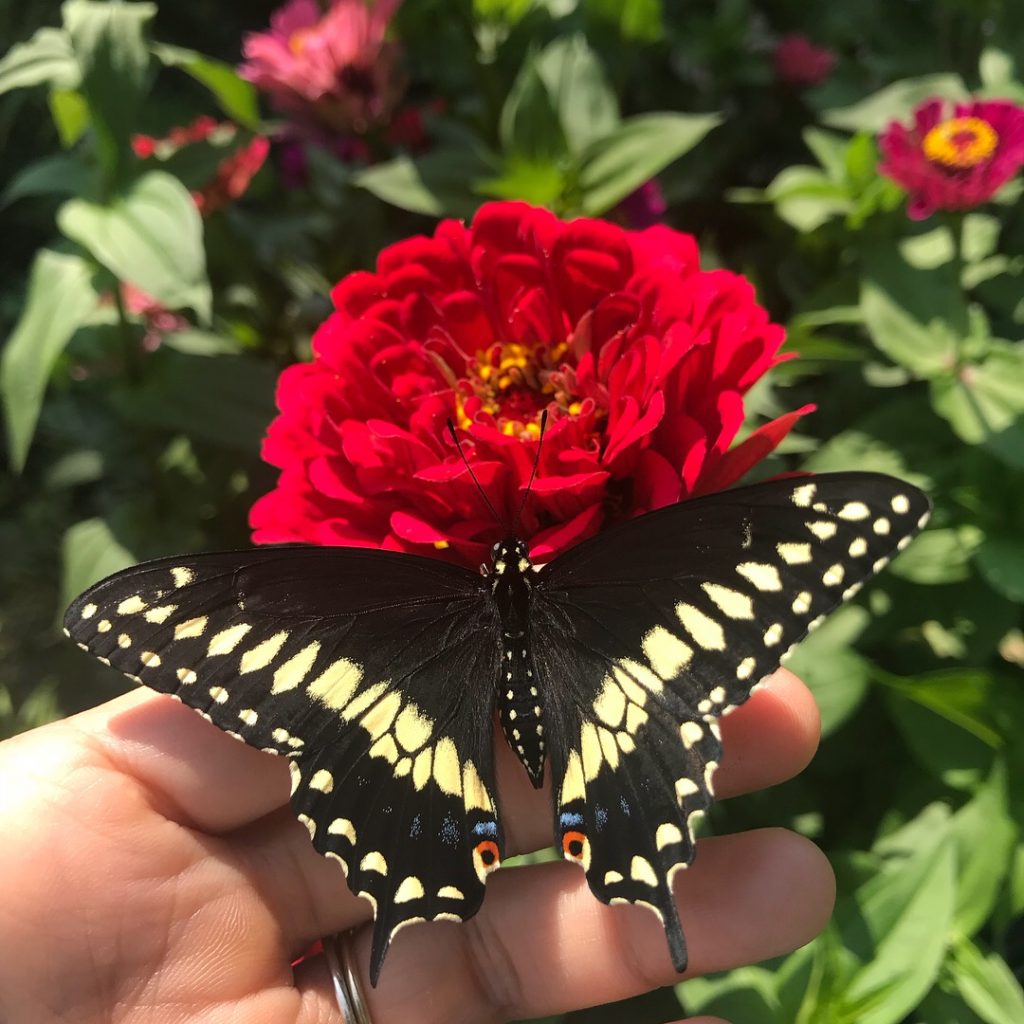
As Fall approaches, the day length shortens, the weather begins to change, and the caterpillar will go into diapause before the pupa hardens into a chrysalis. Diapause is a dormancy period that halts development, which means that the Black Swallowtail will stay in chrysalis form until Spring, and then continue developing into an adult butterfly. If you find a Black Swallowtail caterpillar in your garden in the Fall (Late September or October), allow nature to take its course. During this time, it will produce its own form of antifreeze to prevent its cells from freezing. If brought indoors, the Black Swallowtail may prematurely emerge when nectar plants may not be available to sustain it. Adult Black Swallowtails enjoy nectar from various Milkweeds, Zinnias, and Phlox in my garden.
I observed this Black Swallowtail caterpillar on the dill that I transplanted from my herb garden. Other host plants for Black Swallowtail caterpillars are Queen Anne’s Lace, parsley, carrot, celery, fennel, and rue. We will wait and see if a butterfly ecloses (emerges) or will overwinter.
Keep your overwintering pollinators in mind when you do your Fall cleanup and prepare your gardens for Winter. I set aside trimmed branches, long plant stalks, and leaves just in case there is any wildlife that need to burrow or hide under leaves.