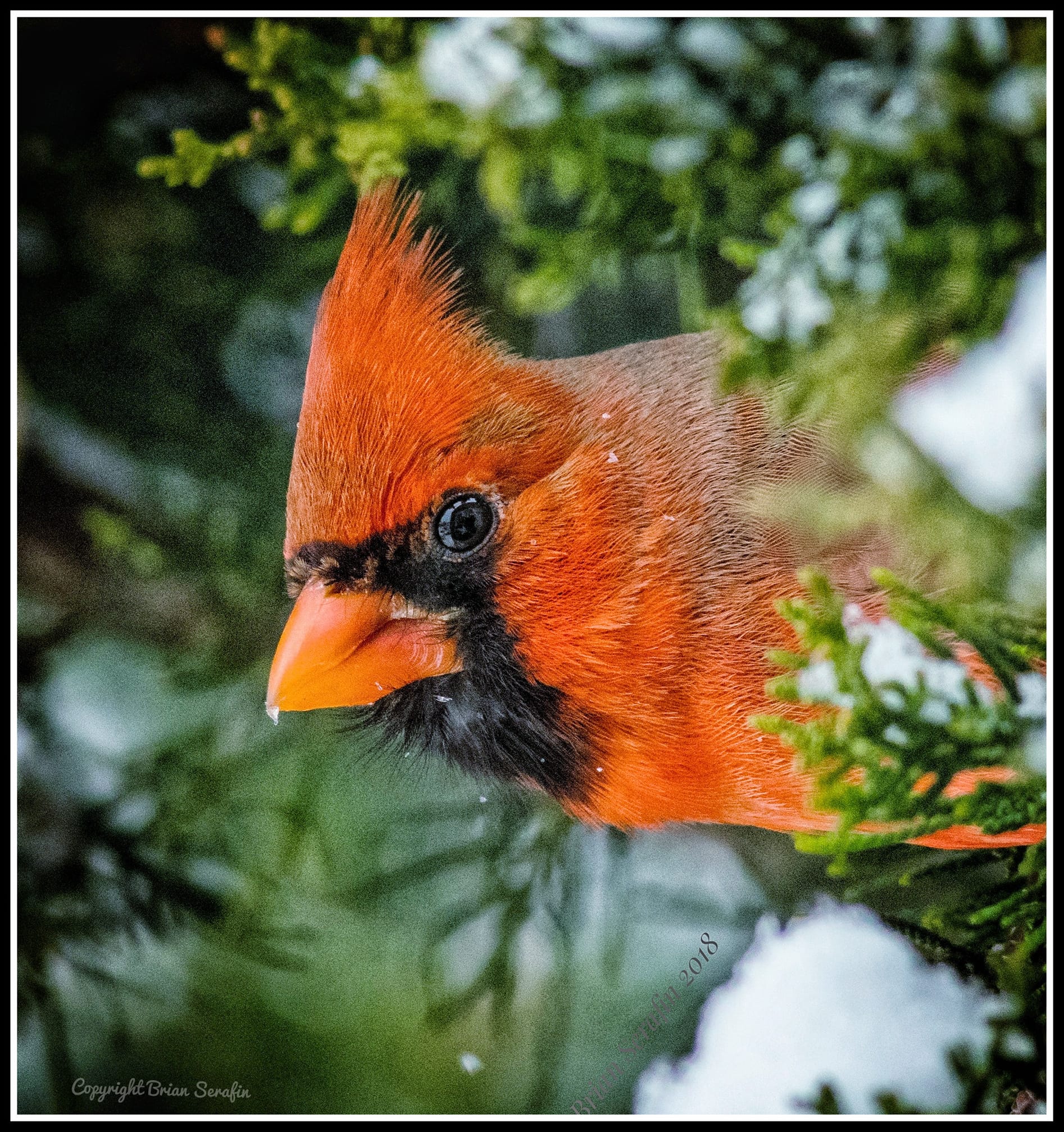
Featured photo: Cardinal in evergreens by Brian Serafin.
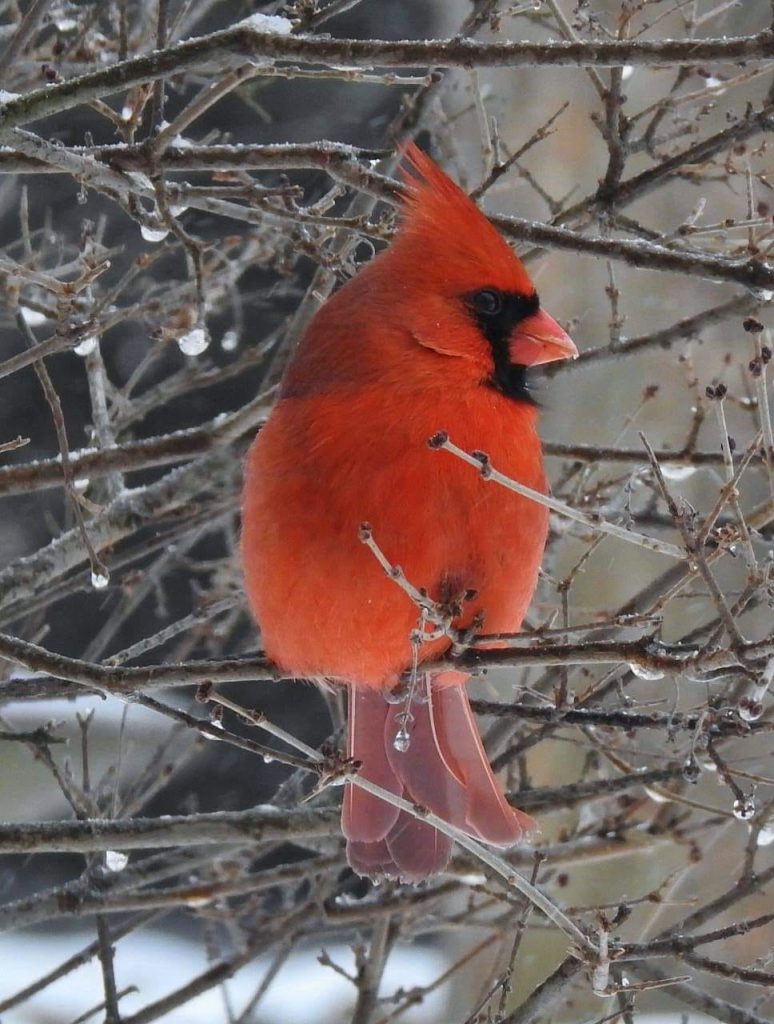
Cardinals are the flashy gift to birdwatchers in the eastern United States. While male cardinals
are as brightly colored as a tropical bird, they are anything but. These beloved birds are
increasing their range north into Canada. Cardinals are seldom present west of the Rocky
Mountains, except south of San Diego. In other words – cardinals don’t go to Vegas or Arizona.
They can handle Buffalo-style winters, making a striking sight against a snowy backdrop.
“Redbirds,” as cardinals are nicknamed, live in a variety of brushy or semi-open environments.
They feed on seeds, berries and insects, so they may be found anywhere from forest clearings
and wetlands, to urban parks. They are often seen around the Iroquois National Wildlife
Refuge’s visitor center, Kanyoo Trail, and Swallow Hollow. They are particularly fond of pine
trees.
Cardinals are a fine example of a songbird – a perching bird that usually fits in your hand. And
like the name suggests, cardinals sing beautifully. They make a clear, two-part whistle that
drops off at the end. Check out the many recordings of this found online.
In the 1800s, cardinals were popular caged birds. This ended when the US and Canada each
passed migratory bird acts in the early 1900s, banning possession of native songbirds.
As a common birdfeeder visitor, we may think of cardinals as living on sunflower seeds and
grain. However, cardinal chicks are fed mostly insects. Building the nest and incubating eggs is
the job of the cardinal female, or hen. She chooses a hidden location at 3 feet or higher, using
grasses, twigs, and other plant material to make a cup. While the female has the famous
cardinal head crest, she is mostly tan with a red beak and no mask. Her dull color helps her hide
and blend in with her nest, which helps protect her eggs and hatchlings as well.
Both parents feed their babies. They may lay another clutch of eggs while raising chicks, for 2-3
clutches a year. Young cardinals are tan without masks, but have black beaks that later turn red
in both sexes. Eventually they grow red feathers in keeping with their sex.

One way to increase cardinal visits to feeders is to place discarded natural Christmas trees
nearby as hiding places from predators. This can also attract the cardinal’s relatives – grosbeaks
and buntings. The family resemblance is in the grosbeak’s heavy seed-cracking beak, making it
look like a cardinal of another color. All of these birds are extremely fond of black oil sunflower
seeds, safflower seeds, white milo, crushed peanuts, cracked corn, and berries.
Glossary
bunting – a colorful seed-eating family of songbirds.
clutch – a group of eggs in a nesting period.
crest – head feathers that stand up.
grosbeak – a seed-eating family of songbirds.
hatchling – a baby bird.
incubating – keeping eggs warm by sitting on them.
milo – sorghum. A seed eaten by animals and humans.
passerine – perching birds, including crows, pigeons and shrikes. Half of all bird species.
Woodpeckers and hummingbirds are not passerines.
safflower – a large white seed available as bird feed.
by Heidi Truschel