By Robert DeLeon
Every spring Iroquois National Wildlife Refuge (INWR) plays host to thousands of birds of many species, which is important in conserving a number of species that are experiencing alarming population declines. In particular, INWR plays a vital role in conserving two species at risk: Eastern Bluebirds and Purple Martins.
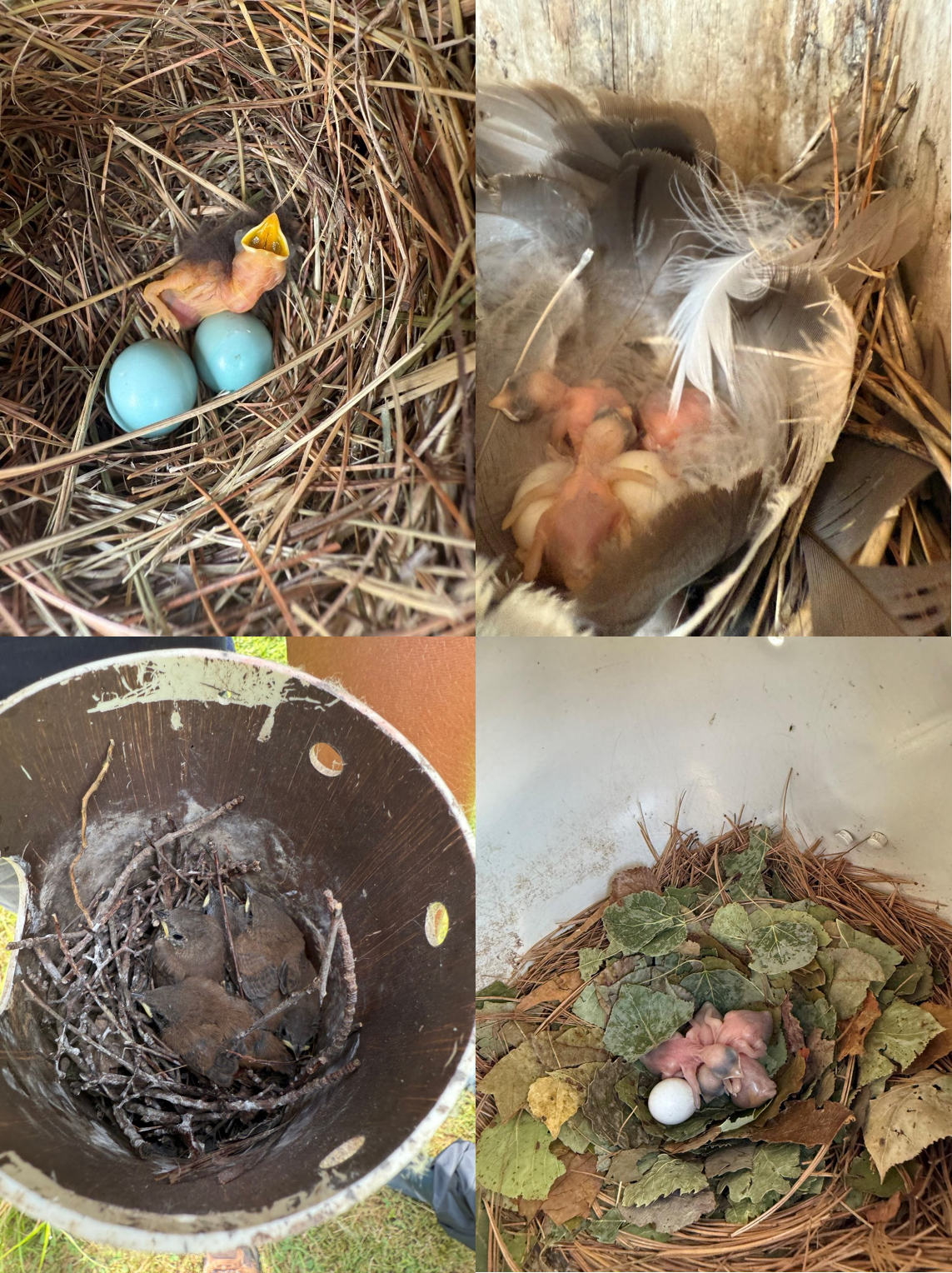
Eastern Bluebird populations declined sharply from 1900 to 1960 with estimates indicating 90% population losses. Starting in the 1960’s conservation efforts featuring bluebird trails, that is, a series of appropriately placed nest boxes, have led to a substantial recovery of the bluebird population. Between INWR and adjacent state refuges Tonawanda Wildlife Management Area (TWMA) and Oak Orchard (OWMA) Wildlife Management Area, there are 122 bluebird nest boxes. These boxes are usually located in pairs. Frequently, one box will be occupied by a Tree Swallow pair and the other by a bluebird pair. Tree Swallows are very aggressive in defending their nests, as anyone who has been dive-bombed during a nest box check will agree. They do not want other aggressive birds such as House Sparrow or even other Tree Swallows in a nearby box but they will accept the peaceful bluebirds as neighbors. Therefore, the bluebird trail hosts Tree Swallows and also House Wrens in addition to the bluebirds themselves. Let’s peek into a bluebird nest box in early spring. There are two beautiful bluebird eggs which are a delicate shade of blue. The eggs are quite large and rather round compared to other eggs such as the Tree Swallow which are much smaller and more ovate. The bluebird nestling was born just hours before the nest box check; Happy Birthday! He is already hungry and is opening his mouth hoping we will feed him. His/her siblings will arrive shortly. It is a little hard to see but the right-hand egg is starting to crack as the second nestling makes its way into the world.
Now let’s peek into a Tree Swallow nest box. The nest looks very different. The Tree Swallow parents have lined the nest with soft feathers. The Tree Swallow eggs are quite small and very ovate. There are two unhatched eggs and three baby Tree Swallows that were born earlier in the day. Next let’s look in that nest box with all of the sticks poking out. are five baby House Wrens cuddling together in the nest box. These birds are about 2 weeks old and will leave the nest in a few days. Most of the nest boxes are occupied by Bluebirds and Tree Swallows with only a few House Wrens.
The other species that INWR is actively conserving is the Purple Martin. The Purple Martin is our largest swallow and eats exclusively flying insects. Dating back to well before the arrival of Europeans, Native Americans would put out gourds for the Purple Martins to nest in. Gradually over the years, the Purple Martins came to depend on nest boxes provided by humans. Now the eastern sub-species of the Purple Martin is completely reliant on human-provided nest boxes to the extent that there have not been any recent records of Purple Martins nesting in natural cavities. INWR, in partnership with TWMA and OWMA, have built up a series of 5 Purple Martin colonies that host over 200 nest boxes each year. It’s time to peek into a Purple Martin nest gourd. The purple Martin nest is made out of pine needles that we have lined the gourd with. The Purple Martin parents form a cup-shaped nest and line the nest with green leaves. The martin eggs are pure white. These nestlings were born just hours before this nest check; they are a delicate shade of mauve. Welcome Purple Martin babies!
Volunteers and Staff at Iroquois and the DEC are working hard to ensure that we continue to enjoy a healthy population of cavity nesting birds. Many thanks to our dedicated crews of nest box checkers and program managers!
Content Strategy by Makarios Marketing