My quiet early morning is suddenly interrupted by a staccato churring cry. After screaming at me, a red squirrel dashes along a downed log and up onto a stump. There he turns and exhibits that apoplectic behavior so common to this little mammal. The angry squirrel flicks his tail and stomps his feet, chattering all the while.
Somewhere nearby is his food cache up to several bushels of nuts, cones and other fruit gathered in the fall and hidden under a brush pile, in an underground chamber or too often in someone’s attic. I have come too close to that important food store —it will be the diminutive rodent’s lifeline through the winter — and he is telling me to get lost!
This behavior is quite unlike that of gray squirrels. The larger species stores food in many holes, a nut or two in each. For the gray squirrel then defense of territory is unnecessary: loss of a few nuts does not threaten its existence. The red squirrel’s cache represents all it has.
Despite this squirrel’s continuing resentment of my presence, I look around. I can almost certainly not find the cache, but I may find the squirrel’s feeding spot. Indeed there it is. Below a low horizontal pine limb is a mound of black walnut shells and pine cone lips. It is a typical red squirrel midden. Each single nut he harvests — or will later retrieve from his storehouse — and carries to that limb, he shells and eats the meat, dropping the waste onto the pile.
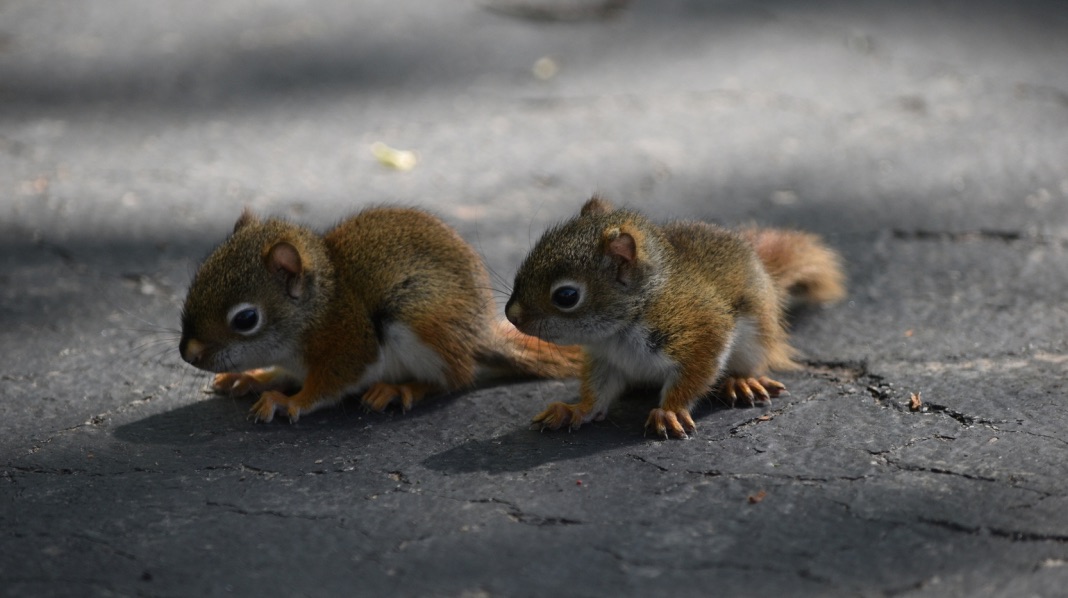
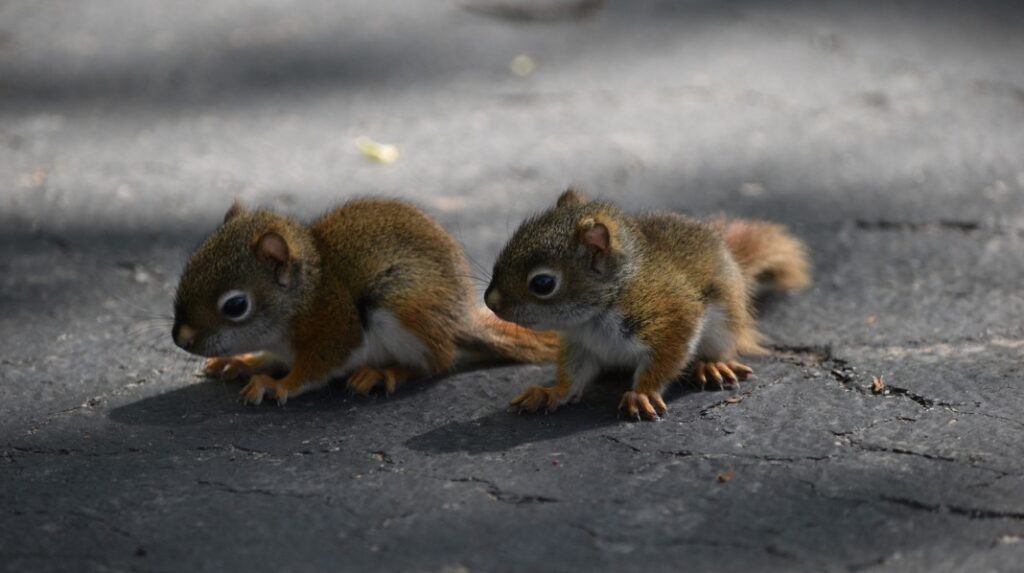
Now I examine the aggravated little beast through my binoculars. His back and tail are reddish, his sides and head gray, his belly and breast white. Like the gray squirrel his eye is also circled with white. The summertime black line along his side is mottled now. By winter it will have disappeared.
Even including their tail red squirrels are only about a foot long and weigh just a half pound. They are scarcely a third the size of their gray cousins but still twice as big as chipmunks.
I once saw a gray squirrel chase a red, but that was quite unlike their usual behavior: that gray was probably a female with nearby kits. More often the chase is reversed, the red driving the gray out of its territory. The real enemies of the red squirrel are house cats, weasels, foxes, the larger hawks and owls and human hunters. Young squirrels are occasionally taken by snakes.
When running, squirrels descend from a leap on their forefeet and bring their back legs forward in position to spring once again. Like other squirrels and the chipmunk, fore prints show four toes, hind five. The groupings are about ten inches apart.