Chasing Refuge Bats

by | Jul 27, 2011 | Archive, Refuge, Wildlife

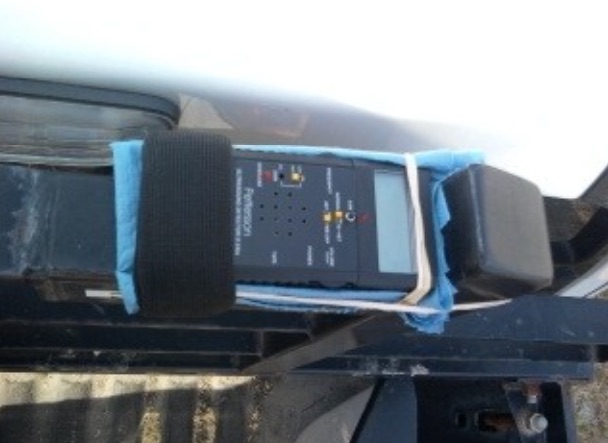
A Petterson ultrasound converter that detects echolocation calls from surrounding bat.
This content has been archived. It may no longer be relevant
Katie Little, Biological Science Technician, attaching an ultrasound converter to a truck for an evening bat survey. The converter will pick up the echolocation sounds from surrounding bats that will allow us to determine the bat species encountered on the survey.

New York State is home to at least nine different species of bats including the northern bat, little brown bat, Indiana bat, hoary bat, big brown bat, red bat, and small-footed bat. This summer we decided to sample the bat species found on the refuge. Bats are nocturnal which means they hunt and feed on flying insects during the night. As an adaption for hunting at night, bats use echolocation to navigate through the trees and find prey. Each species of bat emits a unique ultrasound wave (very high pitched) that travels through the air and bounces off surrounding objects as an echo. Bats use the returning echoes to determine the distance, direction, size and shape of the object.

Using an ultrasound converter, we were able to record these high pitched sound waves. Since each species of bat emits a different sound frequency we can determine which bat species were recorded during the survey period. After the recordings are analyzed we will have an idea of the bat diversity found on the refuge. We plan to continue conducting bat surveys in the future to monitor bat species as well as any changes in population size.

In addition to compiling species identifications and population estimates of bats on the refuge, these surveys will allow us to monitor the presence of a serious disease affecting widespread bat populations. White-nose syndrome is responsible for a large number of deaths throughout the Eastern United States and Canada. The disease is associated with a white fungus that encircles the noses of some bats and causes bats to emerge from hibernation early (months before springtime insects are out) and starve to death as a result. By monitoring population trends, we may be able to determine if these local bats are affected by the disease.
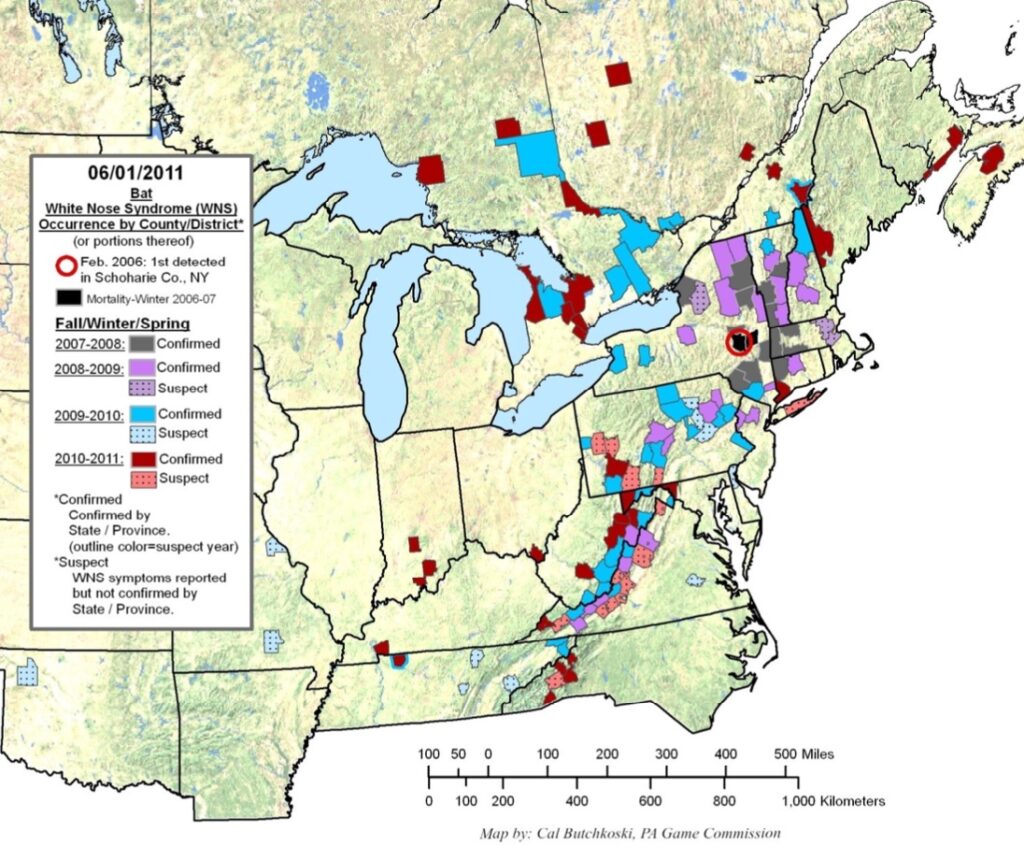
2011 map of Bat White Nose Syndrome

FINWR supports the programs and activities that go on at Iroquois NWR.

More From This Category

Photo contest winners announced

Photo contest winners announced

The Friends of Iroquois National Wildlife Refuge (FINWR) announced the nine winners of its 2025-26 photography contest Saturday during the nonprofit group’s annual meeting. FINWR President Richard Moss of Medina, one of the contest judges, said the quality of the...

read more
Iroquois refuge eaglet named, fledges

Iroquois refuge eaglet named, fledges

By Dick Moss FINWR The eaglet that has been the focus of attention at Iroquois National Wildlife Refuge took flight for the first time Sunday morning. The fledging occurred just a day after Amy Merritt of Corfu, a member of Friends of Iroquois National Wildlife Refuge...

read more
Eaglet about halfway through nestling stage

Eaglet about halfway through nestling stage

By Friends of Iroquois National Wildlife Refuge The eaglet at Iroquois National Wildlife Refuge that many have been following through the bald eagle nest camera was 38 days old as of Monday and is growing by leaps and bounds. Just like human babies, the eaglet is...

read more