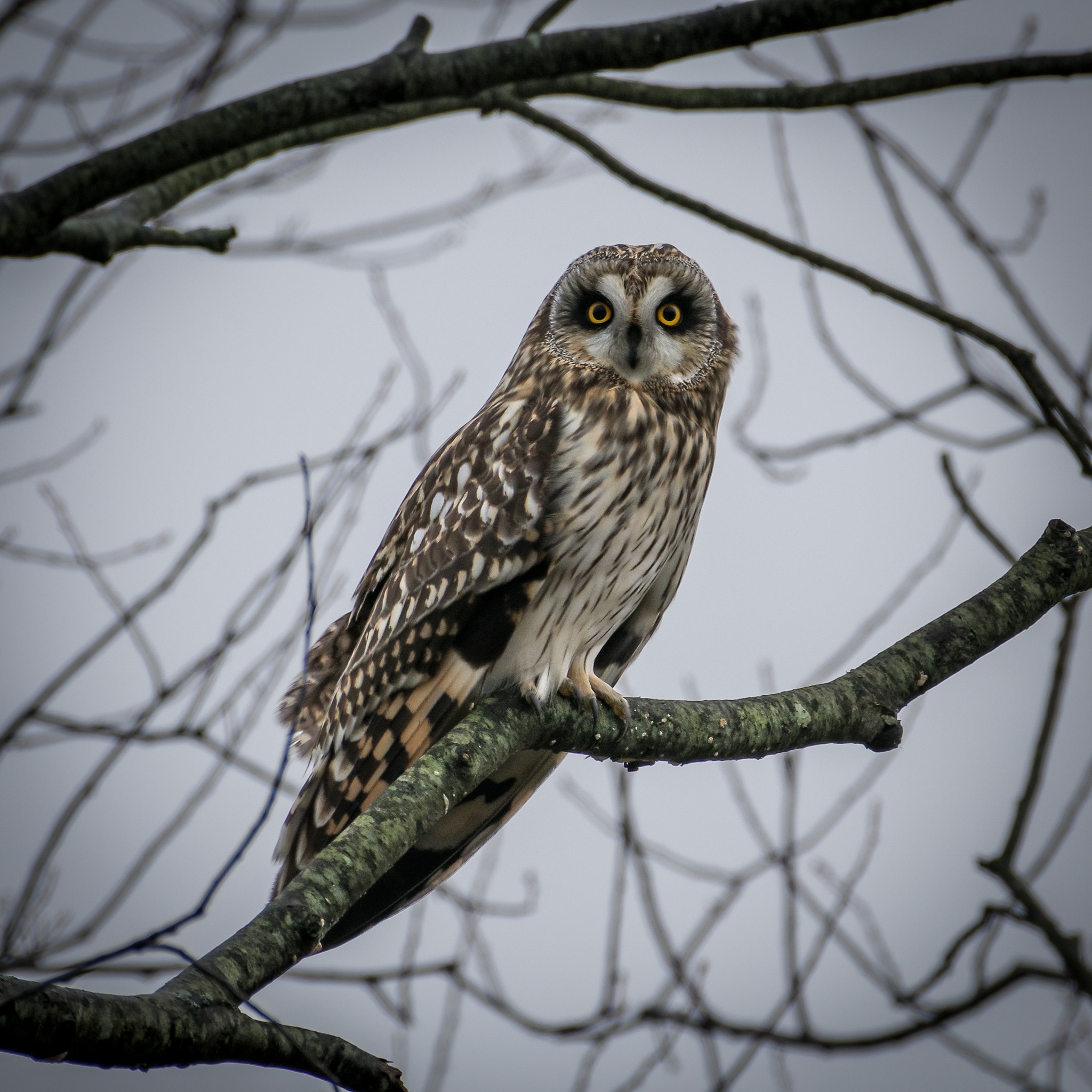
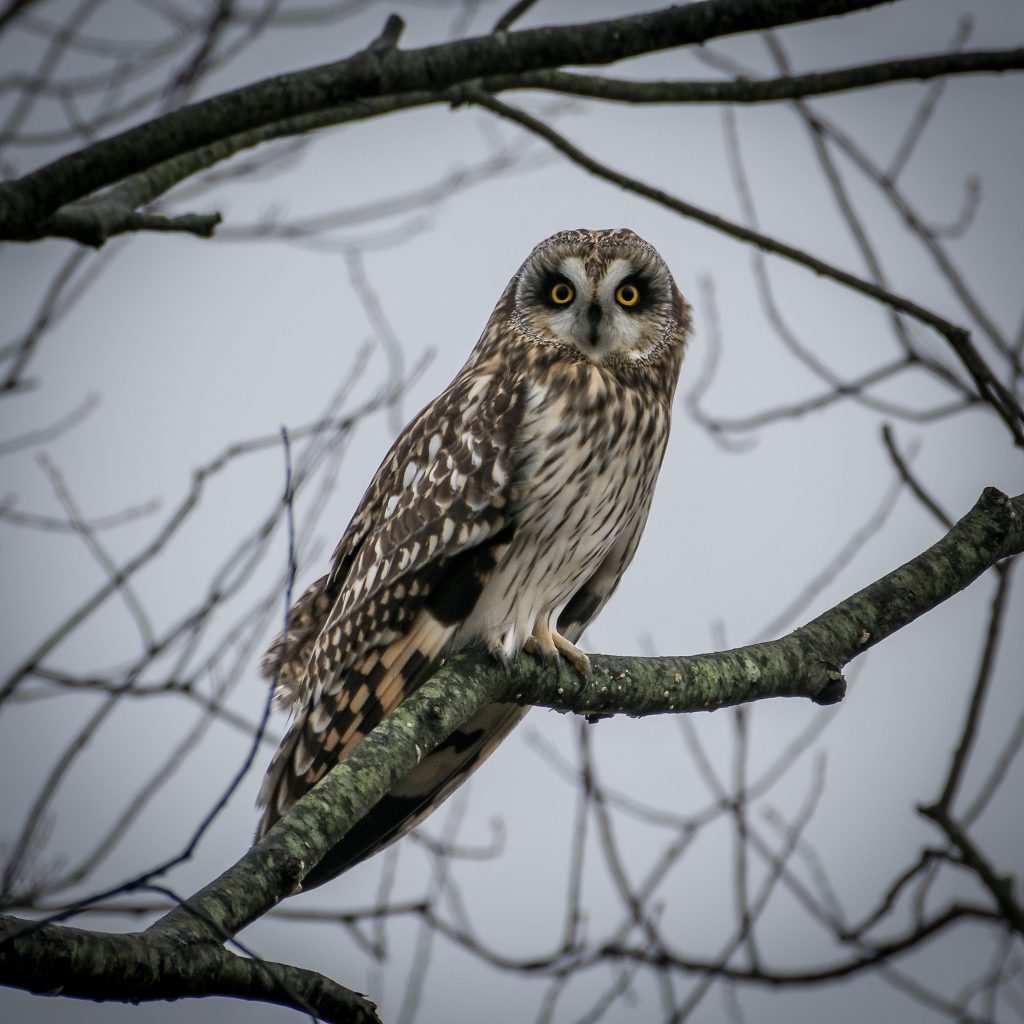
Owls are most often thought of as creatures of the forest. We think of them inhabiting hollow holes in trees, with their large “wise” eyes glowing from the darkness. The short-eared owl is an exception in many ways. This medium-sized owl prefers open, flat environments, and is often active during the day, seen morning and evening. When breeding season comes, the short-eared owl scrapes out and feathers a nest on the ground.
In the Northeast, 6 of the thirteen states have declared short-eared owls endangered, including New York. Once common, the owl’s numbers have declined in New York for decades. According to the state Department of Environmental Conservation, a review of breeding data suggests that short-eared owls may no longer be nesting in several of its old territories – particularly eastern Suffolk County and the upper Hudson Valley. The Lake Ontario Plains region is a known breeding territory, with Iroquois National Wildlife Refuge offering essential habitat. Short-eared owls have been spotted at the refuge during Christmas bird counts and other bird observations.
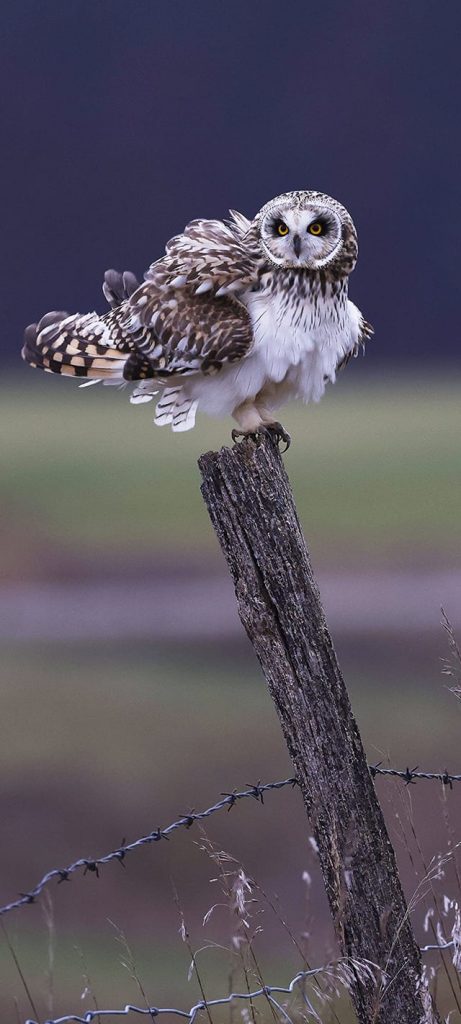
Short-eared owls are birds of grasslands, meadows, and marshes, particularly where small rodents are abundant. While they may be seen perching on fence poles and tree stumps, this owl generally roosts in trees only when the ground is covered with snow. These birds depend on sound more than sight for tracking prey. Their round, flattened face serves as a collector for noises, and their necks can swivel widely to help seek sounds. Their hunting style is to dive from perches or fly low over the ground and pounce on prey from above, often hovering first before hitting the ground.
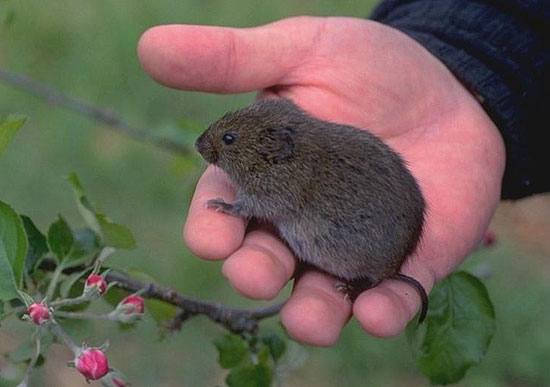
Short-eared owls eat mice, squirrels, and rabbits, but their favorite prey are voles. Sometimes called field mice, voles are small rodents with smaller ears than mice. Voles are active in all seasons, moving under snow cover and eating vegetation. Voles are often responsible for chewing the bottom bark from shrubs during the winter.
The number of wintering birds, breeding pairs, eggs, and fledglings may change each year based on the availability of prey. Short-eared owls are known for interesting flight patterns. While cruising grasslands, their flutter is compared to moths. During courtship, birds may engage in high-flying and dives with wing clapping, exaggerated wing beats, and tussles with each other. Breeding occurs in March through June.
Conservation research has produced best practices to manage grasslands so vulnerable species like the short-eared owl can sustain themselves. This includes best time periods for mowing and/or burning to discourage grasslands from growing into brush and woodlands. You may see these best practices in action at Iroquois National Wildlife Refuge.
By Heidi Truschel